
The best time to visit Iguazú by monthly climate
The best time to visit Iguazú for cooler walking conditions is worth comparing with June and July, while January brings considerably higher average daytime temperatures. For Iguazú Falls weather, distinguish the temperature you may find comfortable from the river conditions needed for your chosen activity. A month that suits walking is not a promise of a particular view, water level or open walkway.
The monthly Puerto Iguazú weather figures here come from the SMN station Iguazú Aero, using the historical normal period 1991 to 2020, published in 2023. Maximum and minimum columns are averages of daily highs and lows, rather than temperature records. The rainfall figures describe historical monthly precipitation, not a forecast for your dates or an official recommendation of when to travel.
Use the table to compare months, then choose a walking plan from the Argentine national park guide. Keep access information separate from climate. A historical average helps explain the difference between seasons; current park instructions guide the choice of available riverside walkways on the day you arrive.
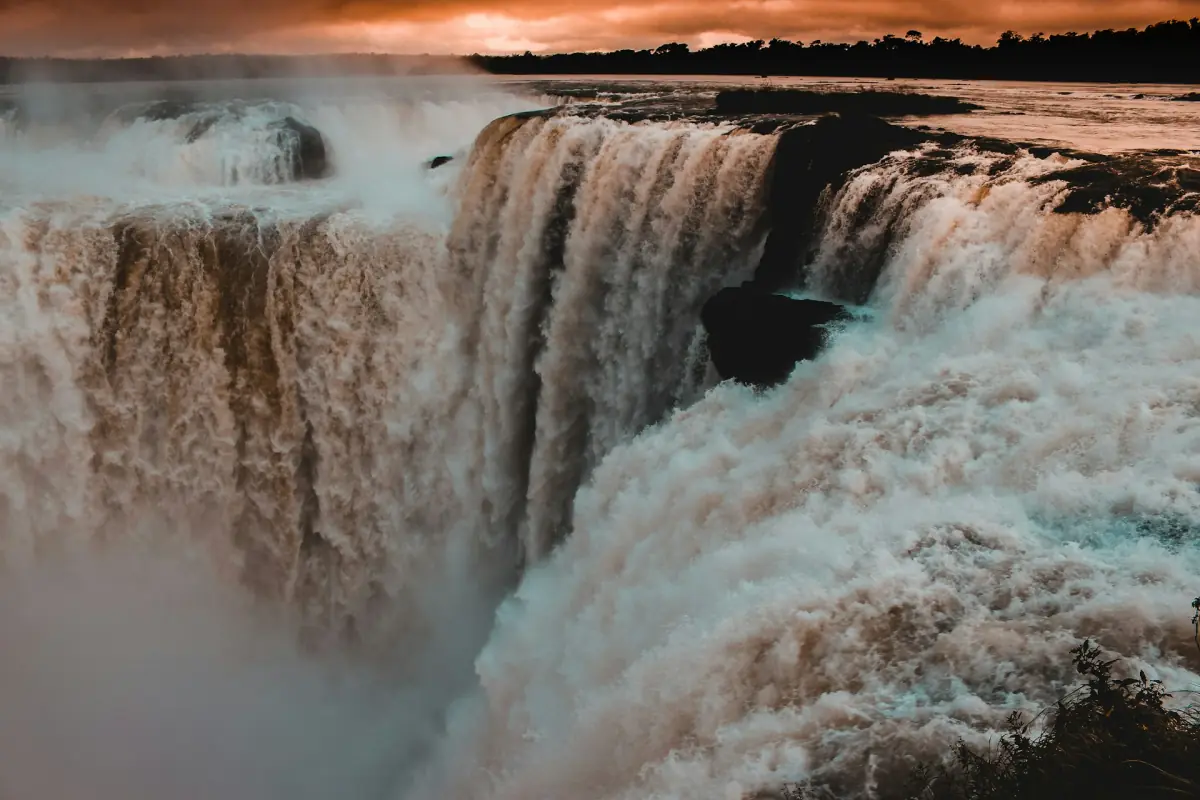
Monthly weather at Iguazú Aero
Iguazú Aero's historical monthly normals show rainfall in every month, with cooler average temperatures in the middle of the year. All figures in the table refer to 1991 to 2020 and the SMN publication of 2023. Read each month's rain separately rather than turning the table into a prediction of wet days during your stay.
| Month | Average high °C | Average low °C | Rainfall mm |
|---|---|---|---|
| January | 32.0 | 20.7 | 180.1 |
| February | 31.5 | 20.4 | 149.9 |
| March | 30.6 | 19.4 | 153.3 |
| April | 27.8 | 16.9 | 161.1 |
| May | 23.5 | 13.4 | 185.5 |
| June | 22.2 | 12.2 | 145.5 |
| July | 22.5 | 11.0 | 107.0 |
| August | 25.2 | 12.3 | 83.7 |
| September | 26.8 | 14.3 | 155.3 |
| October | 28.7 | 17.0 | 247.0 |
| November | 30.1 | 17.9 | 172.3 |
| December | 31.3 | 19.8 | 219.0 |
A weather-dependent boat trip
A guided boat trip is one way to visit the falls, subject to conditions on the day.
Hand-picked tours, booked through GetYourGuide. Prices are indicative starting prices in US dollars (as of November 2026). Tap a tour for live availability and the current price in your currency.
A boat outing subject to weather and river conditions
The Gran Aventura and Argentine falls outing includes a boat tour and bilingual guide. Puerto Iguazú hotel transfer requires the corresponding option; national park admission is extra. Read the participation conditions when planning your day.
Heat and comparatively drier months
Iguazú Aero recorded its lowest monthly normal rainfall in August and its highest in October within this historical table. August's 83.7 mm is comparatively dry, rather than a rain-free season. June and July have lower average daytime temperatures than January, making them useful months to compare if heat is your main concern when choosing dates.
Plan clothing around both daily highs and lows instead of treating the region as equally warm throughout the year. Rain protection remains relevant in any month. Boat spray is a separate source of water from rainfall, so the forecast alone is not a guide to staying dry during a waterfall ride. The boat trip guide explains how those outings differ from walking visits.
Water levels, high water and walkway access
The Iguazú River responds to rainfall across its catchment and to dams, so local monthly rain does not determine the water level at the falls. Avoid choosing a date solely to chase an assumed high-water or low-water season. Your walking route and boat plans need to respond to operating conditions as well as the weather where you are staying.
A park administration notice dated 17 September 2026 reported precautionary removal of Garganta walkways during August 2026. That dated event illustrates how high-water precautions can affect access; it is not a statement of today's route status. Use current park instructions when deciding which circuits to take, and keep an alternative walking plan rather than attaching the whole visit to one viewpoint.
Boats and full-moon visits depend on operating conditions
Gran Aventura combines a vehicle journey and boat ride over roughly two hours; this is the combined activity time, not two hours aboard the boat. The featured guided outing includes the boat and a bilingual guide, with Puerto Iguazú hotel pickup and return only for the hotel-transfer option. National park admission, food and drinks are extra.
Gran Aventura participants get thoroughly wet. Waterproof bags are lent, while ponchos are not included. An original passport or DNI is required for boarding. Participants must independently manage stairs and strong movements and understand and relay rescue instructions. Pregnancy and certain mobility, vision, hearing or cognitive limitations exclude participation under the operating conditions. Participation excludes children under twelve; obtain specific confirmation for a child aged exactly twelve because the age wording differs. These conditions are not individual medical advice.
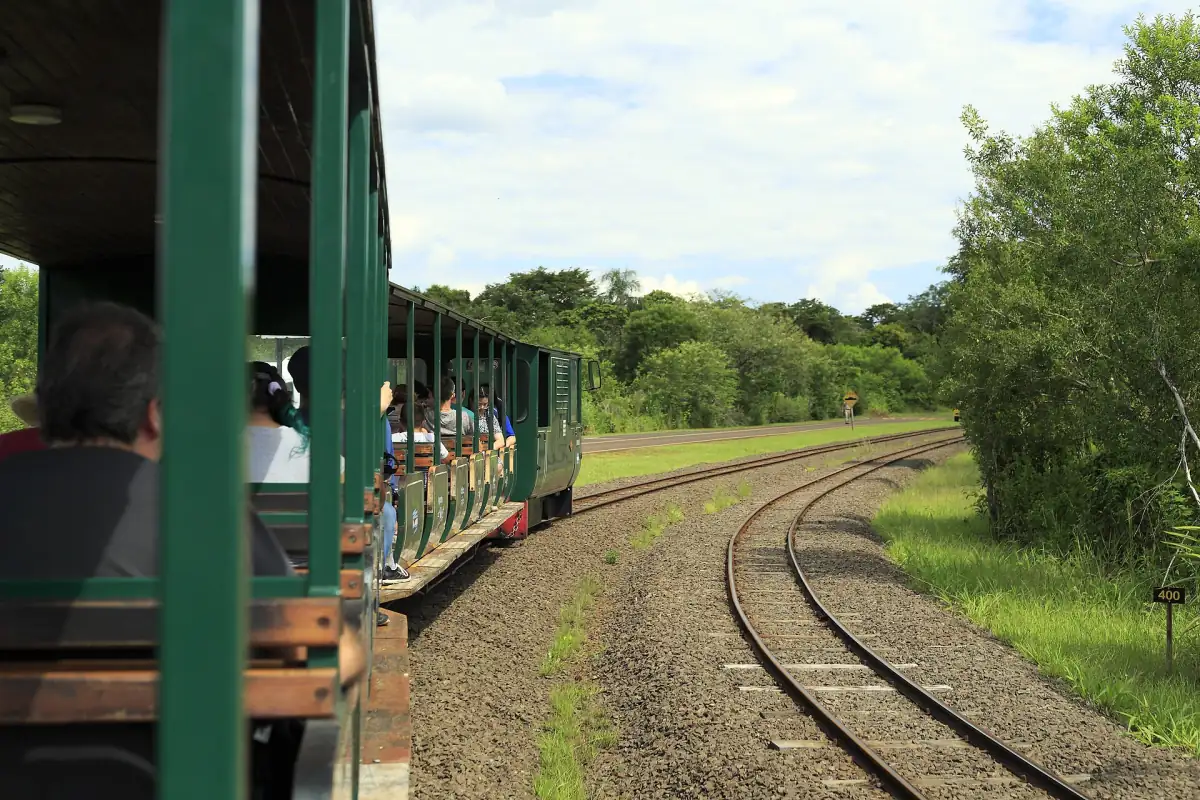
Ordinary rain alone need not cancel Gran Aventura, but unsuitable weather or river navigability can prevent departure. The operator offers rescheduling or reimbursement when the activity does not run. Full-moon visits also depend on weather and safety: the published programme combines night access, a Spanish or English-speaking guide and the train, taking about two and a half hours. Day admission and food are separate. Reserve a published session in advance and arrange the return journey; choose the operating route for that session rather than expecting a guaranteed Garganta visit.
Puerto Iguazú works as the base for these different visits. Use the accommodation location guide to match your stay to your transport, and the arrival guide to keep airport journeys separate from park-day planning.
Questions about the timing of an Iguazú visit
Which months have cooler average daytime temperatures?
June and July at Iguazú Aero have historical average daily highs of 22.2 °C and 22.5 °C, compared with January's 32.0 °C. These are SMN normals for 1991 to 2020, published in 2023. Use them to compare walking comfort, then consult a forecast for your actual travel dates.
Does August guarantee dry weather at Iguazú?
No, August at Iguazú Aero has a historical rainfall normal of 83.7 mm, rather than a rain-free promise. The SMN table for 1991 to 2020 makes August comparatively drier than the other listed months. Rain protection remains useful, and river levels depend on the wider catchment as well as local rainfall.
Can Gran Aventura run on a rainy day?
Yes, Gran Aventura can run in ordinary rain when weather and river navigability permit. Rain alone does not decide departure, and high water is not a promise that the ride will operate. The activity involves getting thoroughly wet and has age, document and physical participation requirements separate from the forecast.